 ThinkSpatial
Nobody Reads the About Page
Thirty years of someone's work usually ends up as a bio few people finish. I've been turning it into a short film you can talk to. What a living canvas is, and what getting strangers to stay with one taught me.
I keep landing on the same kind of page. An architect, a designer, a broker, someone with thirty or forty years of work behind them. Books about their work. Decades of projects. A long list of awards. And all of it sits in one long column of text on their About page.
I don't want to read it, and I doubt many people get to the end.
That stuck with me, because it's backwards. The people with the most behind them have the least way to show it. Someone starting out posts every day. Someone thirty years in has an archive, a handful of interviews, and a bio. Their work speaks for itself. Their story usually doesn't get to: how they started, the years that nearly ended it, the decision that changed everything after.
So I've been building something else for that story. I call it a living canvas.
What a living canvas is
It's one page about one person, in their own colours, with their work on screen. A voice tells their story in chapters, in date order, like a short film. When it talks about a building, the building comes up. When it moves on, so does the screen.
At any point you can talk to it. Ask a question out loud and the voice answers, and the pictures follow what it says. When you're done asking, it carries on with the story.
The canvases I've made for real people are private links, and they stay private until the people in them say yes. So the one I can show you is about us: ThinkSpatial's own canvas. It's about a company, not a person, but it's built the same way.
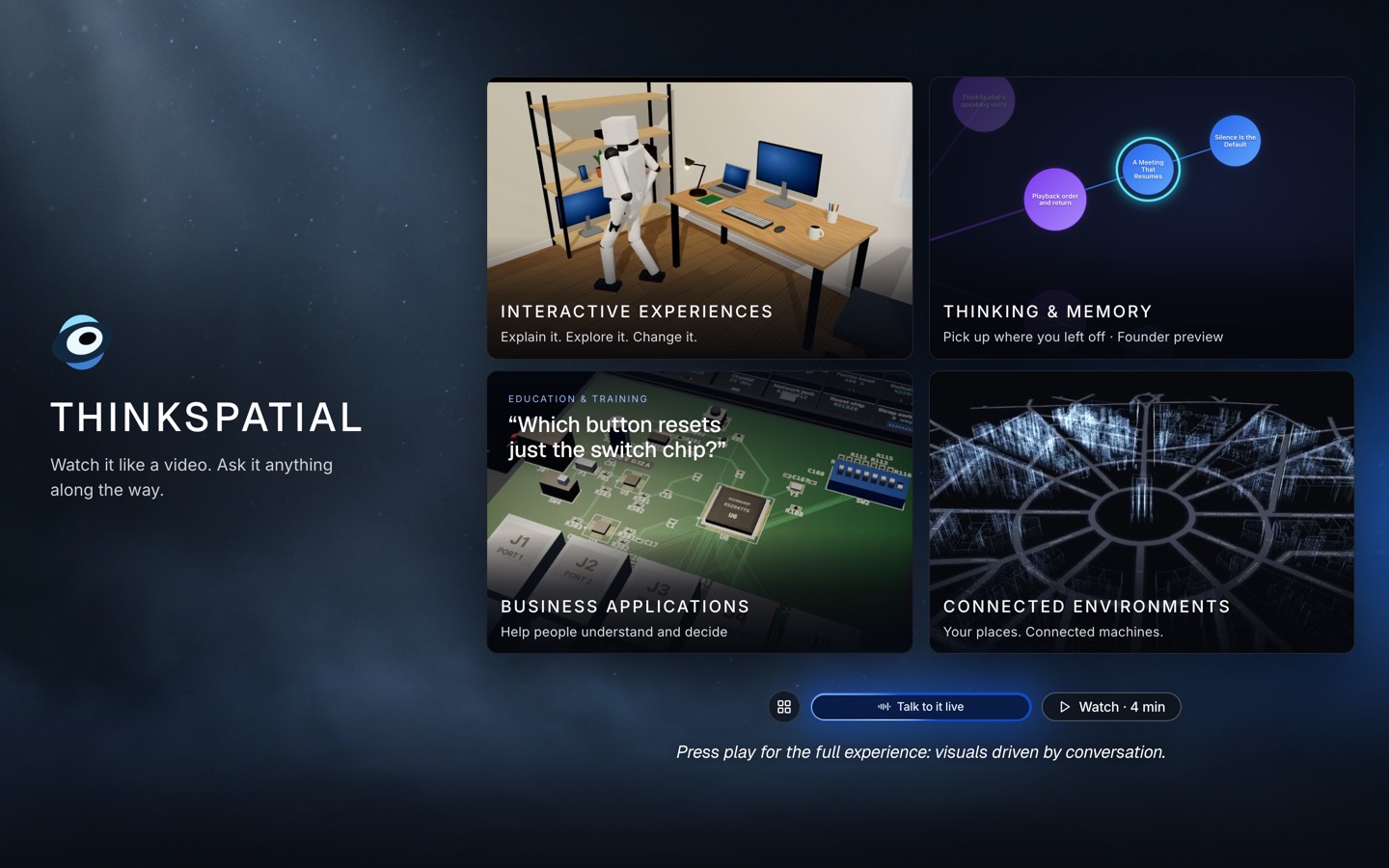
Getting strangers to stay with one has taught me more than building it did. Here is most of what I learned.
Nobody presses the voice button
The first version waited for you to talk. There was a button for the live voice, and until you pressed it, nothing happened.
A friend opened one, tapped around, and got nothing back. Nobody on the internet expects a web page to talk with them, so nobody presses the button that would make it.
Everyone knows how to watch a video, though. So now each canvas is also a film: the story written ahead and played with the pictures it talks about. For a while the film started by itself. That took the choice away, so now a canvas opens on two buttons: Watch, with how many minutes it runs, and Talk to it live. Either way, the visitor chose.
On a person's canvas, the film is read aloud in the same voice that answers live. Press Talk to it live partway through and the narrator doesn't change. You just start asking.
Say exactly what a button does
While the film played silently, the button under it said "Tap for sound." That sounds like you'll hear the film. Press it, and the page asks for your microphone, because what it really starts is a conversation. That feels like a trick, even when nobody meant one. It says "Talk to it live" now.
Waiting has the same problem. Someone watching without sound can't tell whether the story has ended or is just between scenes. So the page says what comes next and counts down to it.
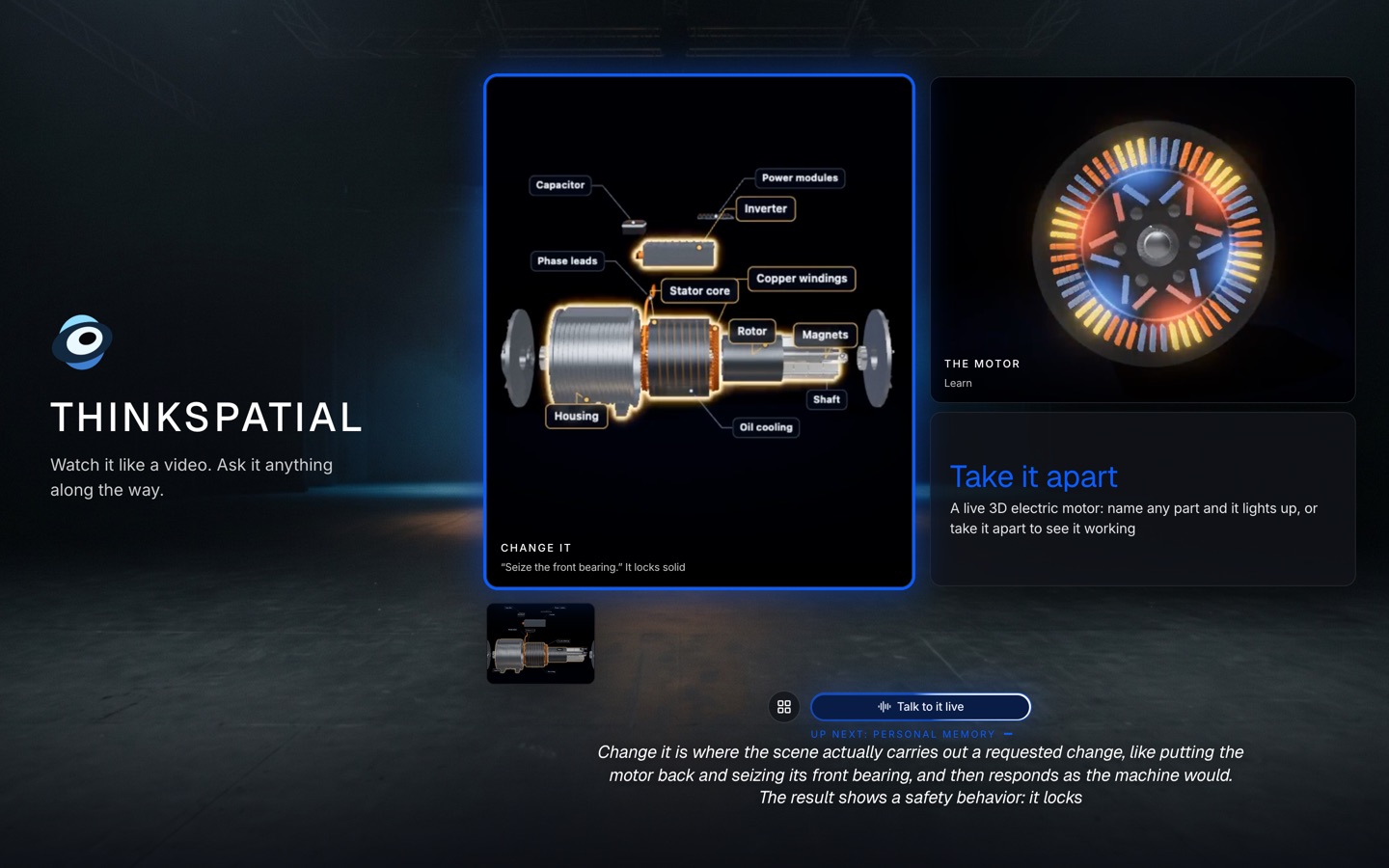
Anything that sounds like an offer reads as a scam
A canvas once said "Live voice, free to try. No sign-in." under its button, with a Sign in link beside it. I looked at it the way a stranger would, and it read like a scam. On a page about a person, that line is the moment it stops looking like their page and starts looking like a pitch. People came to see someone's story, not to be offered something. I took it off.
The screen moves only for a reason
My first instinct was a slideshow: keep the pictures changing so the page feels alive. It felt busy, not alive. Now nothing changes unless the voice names it, you ask to see something, or you swipe. On a phone that means one picture at a time, sliding in, never swapped in place, because swapping in place flashes. Fades flashed too, so it cuts.
The harder part is the words a voice says about everything. A word like "conversation" comes up again and again, and for a while, every time it did, the same card came up beside whatever was already showing. A screen that follows a voice has to know which words point at something and which are just talk.
A life, not a portfolio
The first canvases walked through the work. This project, then that one, who it was for, what year. Accurate, and a catalogue. Nobody wants to learn about every single building.
What people will sit through is a story. Where someone started. The years that went wrong. The decision that changed what came after. So a canvas is now built as a life in chapters, in date order, and the work comes up as part of the story instead of being all of it.
And it has to be about the person, because the person is the one who will share it. I want someone to watch their own and feel that somebody went through everything they ever did and told it right. Without flattering them. A good story doesn't need praise, and the films don't use praise words. The dates, the work and the person's own words carry it.
True, line by line
Every sentence in a film stands on something already published: an interview, an article, a firm's own pages, a book. And it says who did what the way the source does. A confident voice will happily give a person credit for something their firm, their partner or someone before them did, so each line is checked against the record before it goes into a film.
What no page says, a canvas doesn't say. Family stays out unless they're already part of the person's public story.
Real pictures first
Some of the moments that matter most were never photographed: a handshake, a phone call, the first morning in an empty office. Put a caption over an unrelated photo and the caption does all the work. The picture adds nothing.
For those moments, a canvas can use a generated drawing: simple, one subject, in one style across the whole film.
Except for people whose work is itself the picture. For an architect, an interior designer or an artist, nothing is generated. Every picture is their real work, their own sketches, or photographs from the time. Where there's no picture, their own words go on a plain card instead.
What it isn't, yet
Nobody has said yes yet. The first one went out to the person it's about this week.
The film is written ahead and checked line by line. The live answers aren't checked before you hear them. The voice is held to the same record, but it can still slip on a detail. That's one reason the film comes first.
And most of the work isn't the page. It's gathering everything a person has published over decades, putting it in order, finding pictures from each period, and checking every line against it.
If your work is bigger than your About page
If you've spent decades on work that deserves more than a column of text, or you know someone who has, write to me at hello@thinkspatial.ai.
The work can speak for itself. The story needs someone to tell it.